A worktop carries most of a kitchen’s daily demands: water, warm cookware, crumbs, strongly coloured ingredients and repeated cleaning. A surface that looks excellent on a sample may not suit the way a household cooks or its appetite for maintenance. Start with habits rather than a popularity ranking.
Consider whether you cook every day, place pans down without a mat, bake often, or continue the worktop into a table or window sill. Your response to normal signs of use matters as well. One person sees a gentle patina as character; another will find every visible change frustrating.
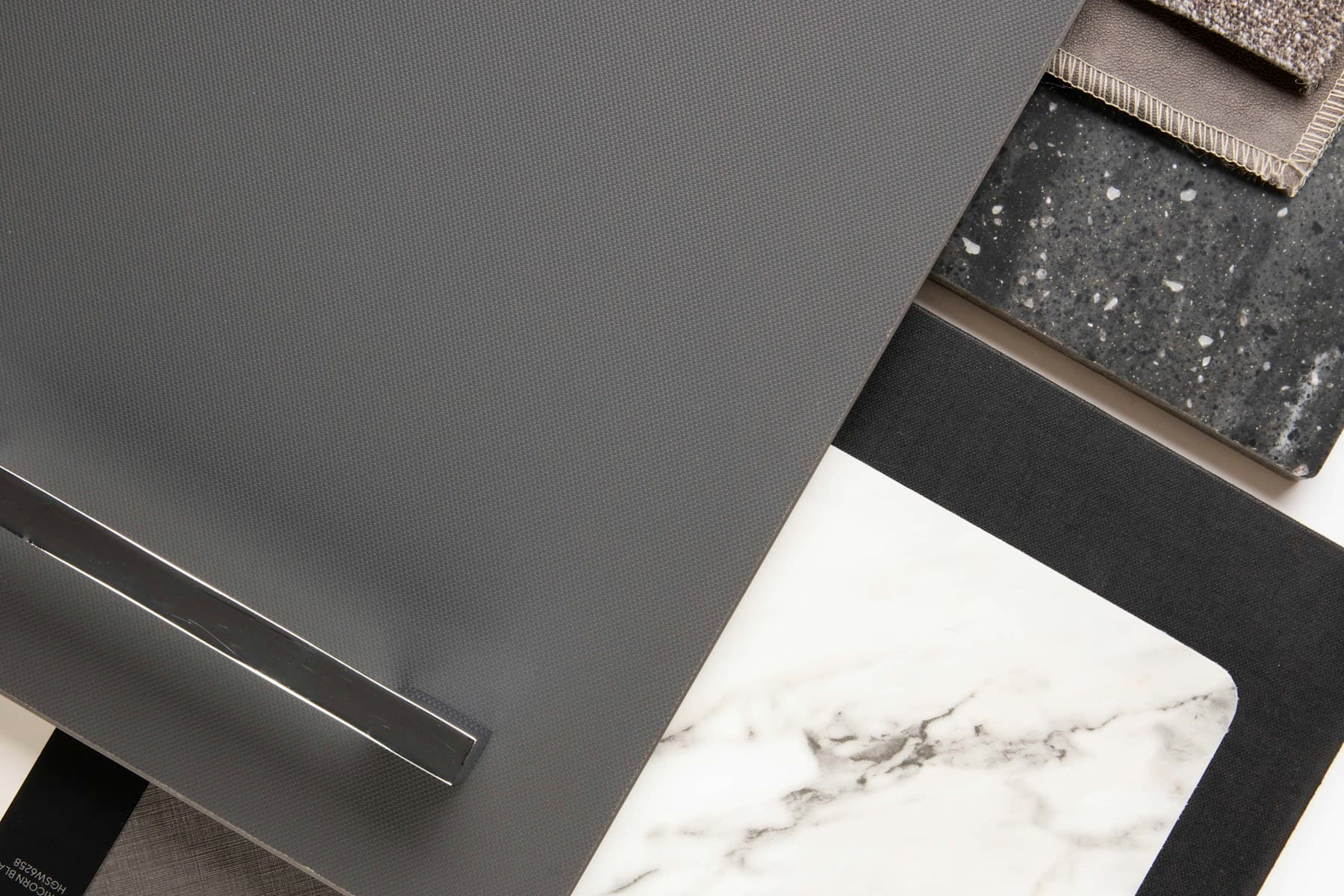
Compact laminate creates a light, precise line
Compact laminate is thin, has a solid-coloured core and works well with restrained contemporary cabinetry. It creates a slim edge without an applied build-up. The surface is straightforward to clean, but accurate cut-outs and properly prepared fixing points remain essential.
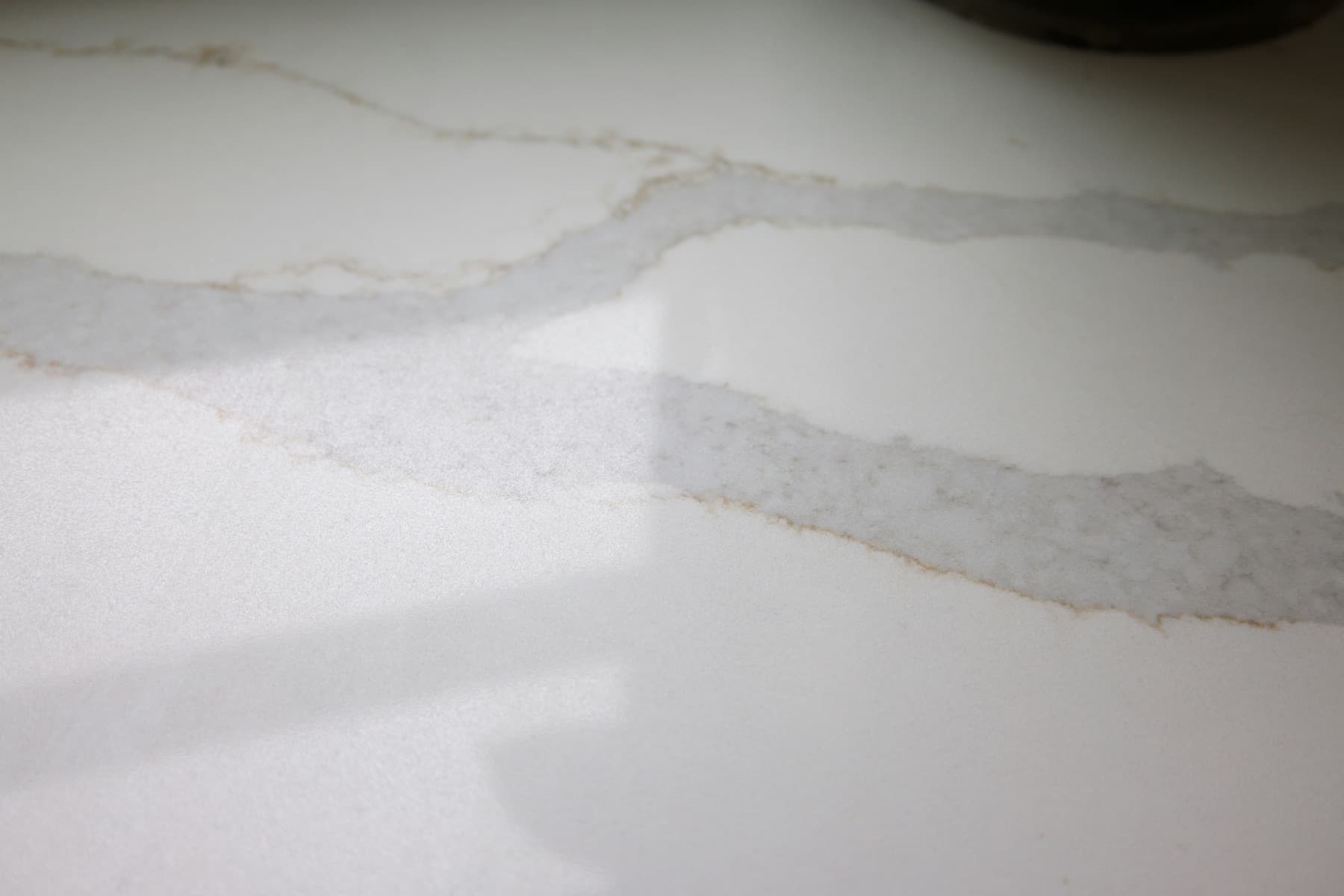
Pay attention to the colour of the core and the treatment of joints. On a long run, a connection may remain visible, so its position should follow the cabinet layout rather than occur by accident. Choose pattern and texture from a large sample, because a small piece cannot show the rhythm of an entire slab.
Sintered stone needs well-designed details
Sintered stone is often selected for a hard-working surface and the availability of large formats. That does not make it indestructible. Edges, corners and areas weakened by cut-outs still need care. The design should account for suitable corner radii, support and a safe route for bringing finished pieces into the room.
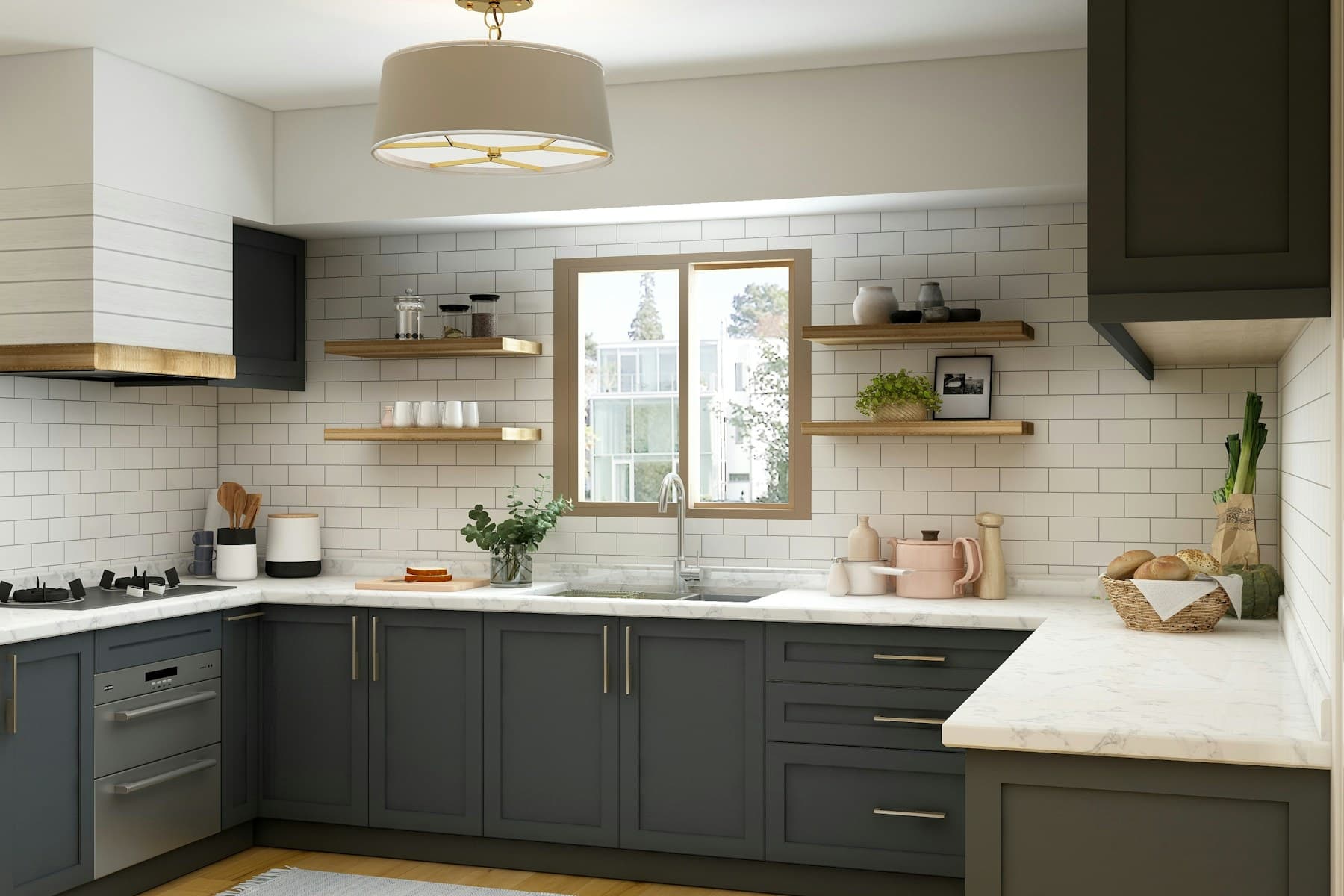
With an undermounted sink, flush hob or slim edge, fabrication quality becomes as important as the chosen surface. Agree the edge profile, visibility of joints and seam positions before ordering. Moving an appliance after fabrication can mean replacing a complete element.
Timber changes as the kitchen is used
Timber feels warm, can be renewed locally and makes a natural bridge between kitchen and living space. It also moves, develops marks and needs periodic care. Areas around the sink, joints and places where water can remain on the surface deserve particular attention.
An oiled finish usually makes local repair more practical but needs regular refreshing. Lacquer creates a more distinct barrier, while local damage can be harder to correct invisibly. In either case, performance depends on timber species, worktop construction and installation quality as well as the finish.
Detail determines the life of the whole surface
- position joints in relation to the sink, hob and cabinet divisions
- check minimum distances between cut-outs and exposed edges
- match the support method to the material and unsupported span
- view a full slab or large sample in the room’s actual light
- understand cleaning and renewal before making the decision
A good worktop is not a surface that needs no care. It is one whose care fits naturally into the rhythm of the home.
Tavaro Home studio
No single material is best for every kitchen. Compact laminate delivers a light visual line, sintered stone suits demanding surface use, and timber offers renewal and natural ageing. Make the final choice together with the plan for cut-outs, joints, edges and maintenance. Only that full specification creates a durable worktop.